Discover Corklip, our patented innovation for cylindrical cardboard packaging + cork stopper

Corker since 1887

Our history

Immerse yourself in the fascinating history of the cork oak and the Au Liégeur factory. Join the women and men who brought it to life and share our deep connection with the land, nature and time.

Our history

The context in the 19th century

Cork is a natural material obtained from harvesting the bark of a tree: the cork oak (Quercus Suber). This tree has been a typical species of the Mediterranean basin (5) since the Tertiary period (60 million years ago).

In France, this species is found in Nouvelle-Aquitaine, particularly in a small area of the Landes department called Marensin, where it has been exploited since ancient times: beehives, fishing nets, and especially for corks. (1)

In the past, accounts report that corks were made locally by hand, often using a simple knife. And so, in the sheds or attics of old farms, you can still find shepherds’ water bottles or clay containers sealed with handmade corks that are still watertight today! (4)

However, in 1830, a particularly harsh winter caused the almost total destruction of cork oak trees in several cantons. In Marensin, local cork production collapsed. This decline was further exacerbated by Napoleon III’s law of 19 July 1857, which made maritime pine production compulsory for municipalities in the Landes forest. (7)

However, a coincidence that only history could create occurred. That same date, 1830, also marked the beginning of the French colonial era. And with the colonisation of Morocco and Algeria, where cork oak trees are particularly abundant, the exploitation of this resource, far from disappearing, quickly grew exponentially, boosted by the industrial revolution. The emergence of factories and manufacturing plants marked the end of domestic production and family workshops. (2)
Our history

Growth and the golden age

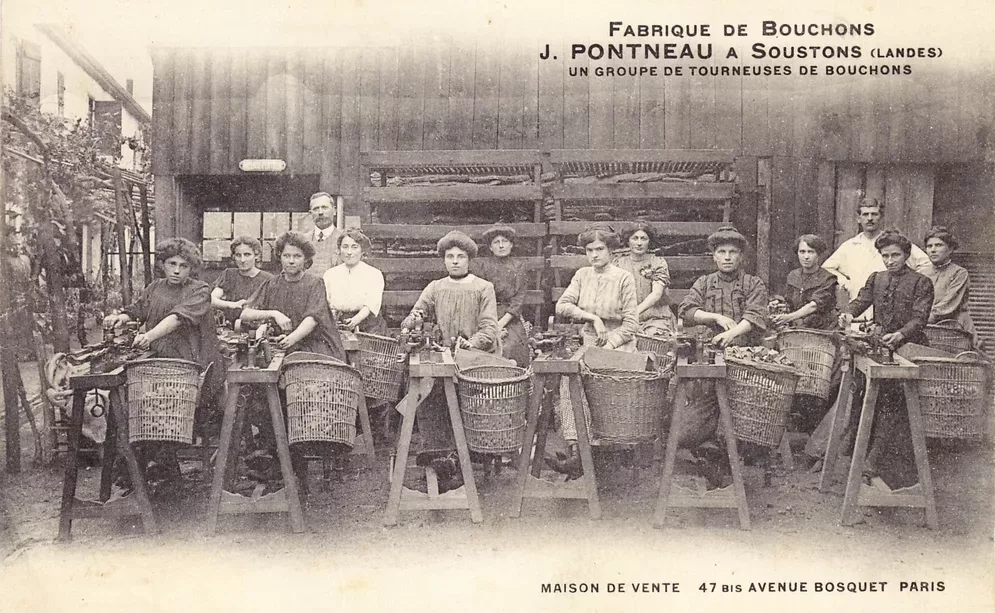
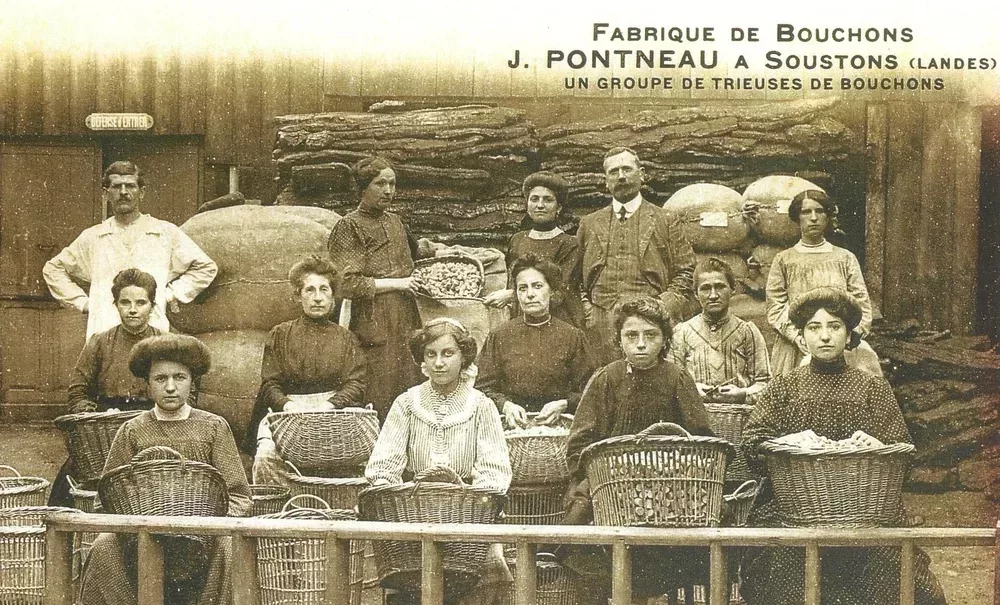
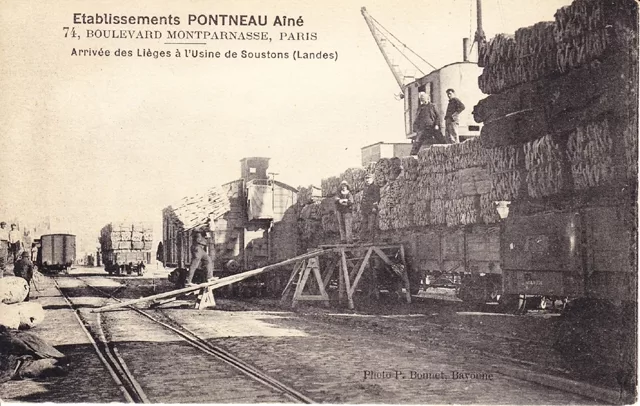
The Pontneau family, based in Soustons, quickly became a major player in this new cork industry. Their cork oak forests in North Africa were organised to produce a high-quality annual harvest, which arrived en masse in mainland France by the boatload via the port of Bayonne (6).

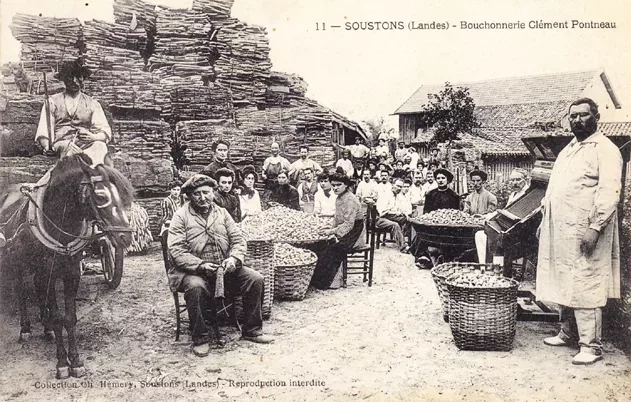
From there, the new railway line transports the cork directly to Soustons. Unloaded from the wagons, the cargo is stored in a yard and processed by the family’s factories, which are springing up like mushrooms in the local area.

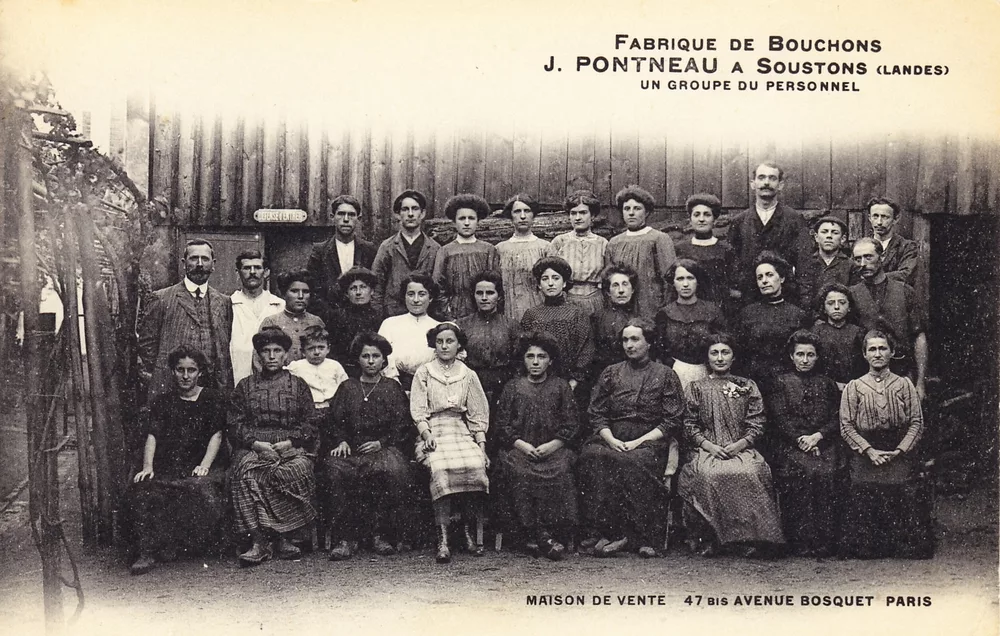
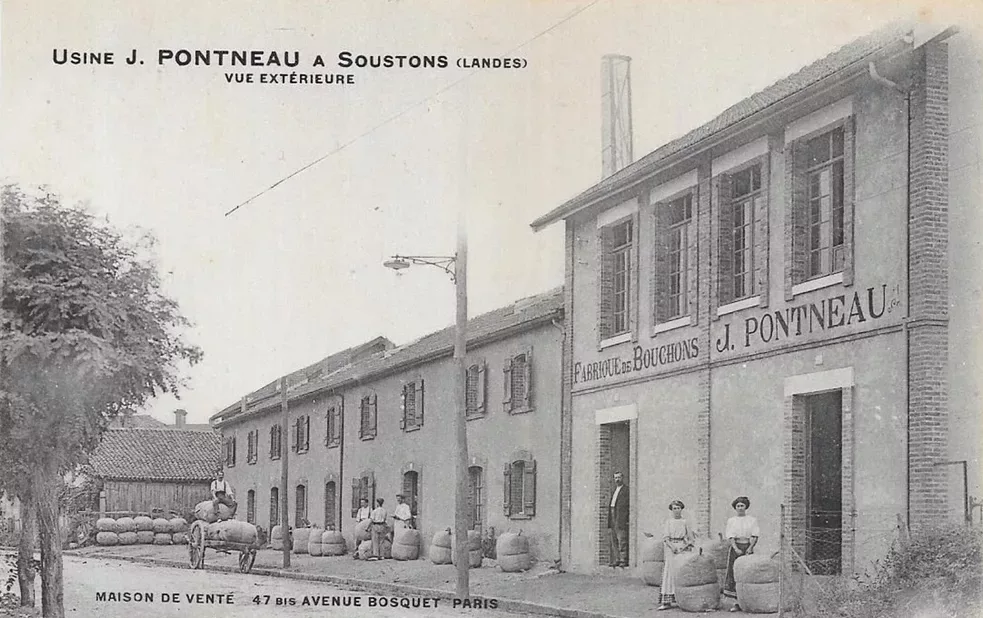
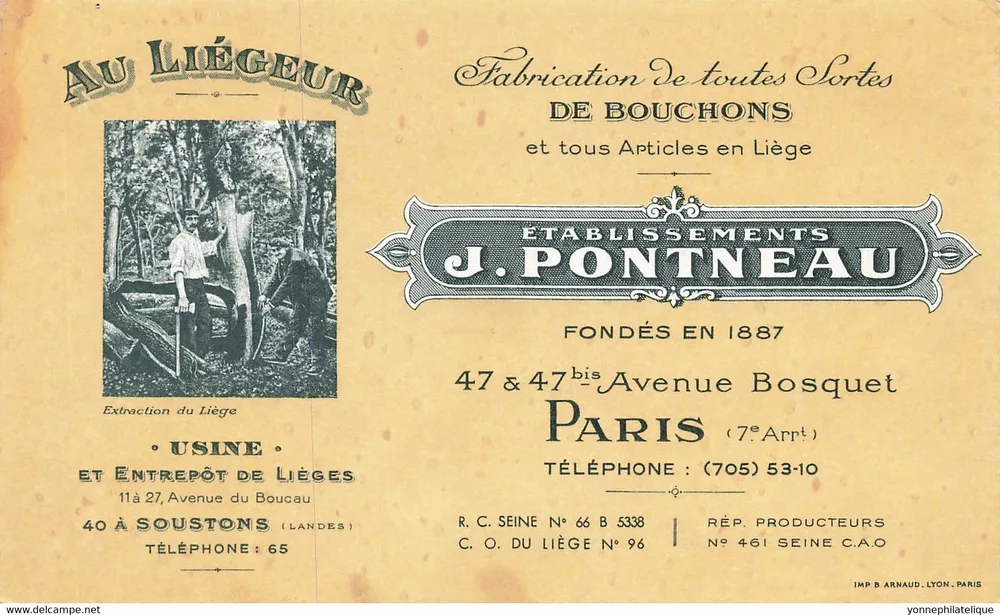
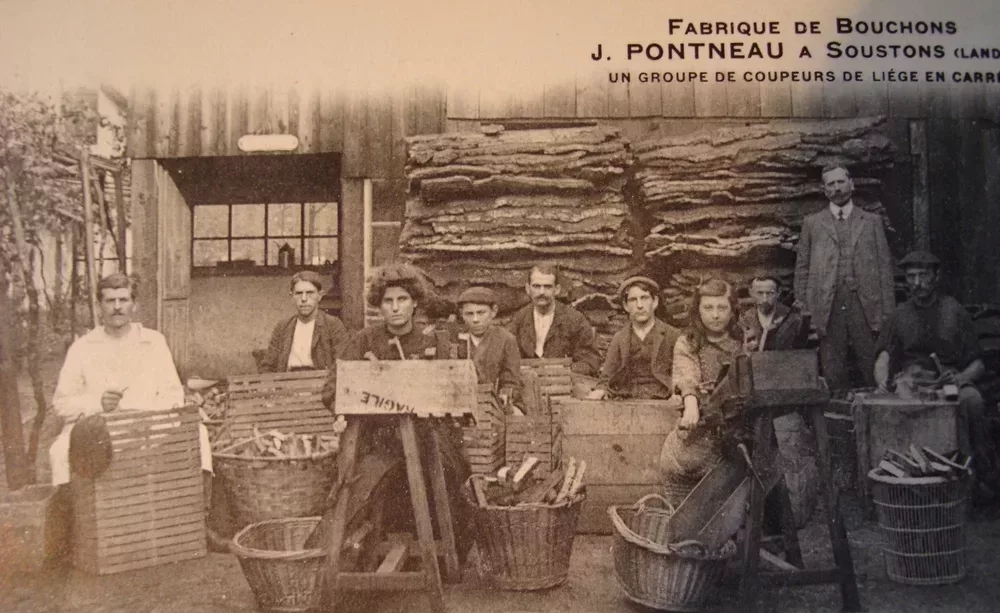
Founded in 1887 in Soustons, Au Liégeur quickly became an iconic manufacturer in the town. It employed a large workforce of almost a hundred people, and its market, naturally driven by its proximity to the Bordeaux vineyards, continued to grow.

Thanks to its sales office in Paris, the company expanded throughout France and then into export markets.

The interwar period and the 1930s marked the peak of prosperity for Au Liégeur.

The factory façade, with its beautiful Art Deco inscriptions, still bears witness to this golden age in the centre of Soustons.

Delve into 140 years of history with the old maps at Au Liégeur!

Our history

Difficult times

But in the 1950s, plastic began to invade all areas of household consumption, and cork stoppers suffered directly from this new and colourful competition. Then decolonisation dealt a fatal blow to the industry.

From the 1960s onwards, the material became more difficult to obtain. Spain and, above all, Portugal, which had always preserved their cork oak forests, began to establish themselves as market leaders. (3)

For Au Liégeur, as for all his colleagues, a difficult period then began.

When Denis Pontneau passed away, his wife Marie took over the management of the company. And while some, discouraged by the mounting difficulties, decided to close their doors, Au Liégeur decided to fight and resist.

Since the 1990s

A new direction, a new impetus

In the early 1990s, under the leadership of Jean Landais, a former foreman, Au Liégeur fought for its survival, knowing that a change of model was needed. Henri Garcia, who took over the company, abandoned the volume strategy in favour of a differentiation strategy.

In 2019, Denis Sabouret took up the torch and, under his leadership, Au Liégeur experienced a new lease of life.

It focuses on innovation and has a new product range geared towards specialities, characterised by numerous patent applications and a rich portfolio of brands.

Au Liégeur is now the last French company to manufacture corks locally from raw cork.

Fully aware of the company’s historical heritage and regional roots, the management team relies on a close-knit, loyal and highly effective team to perpetuate its expertise and develop its markets.

Ressources

Bibliography & references

(1) Le Chêneliège, sa culture et son exploitation, by A. Lamey, original edition 1893

(2) Le liège et les industries dérivées, by Charles Lafargue, edition BT, 1948

(3) Subericulture, by J. Viera, published by l’Ecole Nationale des Eaux et Forêts, in 1956

(4) Le Liège et l’industrie du Liège by Ch. POUILLAUDE, published by la confédération nationale des syndicats du liège et des dérivés, in 1957

(5) Le Chêne liège et le liège dans les pays de la Méditerranée Occidentale, by S.A. Yessad, published by Lavoisier, in 2000

(6) Les industries de la Paille et du Liège dans les Landes, by S. PACAUD, published by PyréMonde, in 2012

(7) La filière liège en Aquitaine, by Mathieu-Jenssonnie. Edition Forêt Méditerranéenne, 2012

Key executives

1887 – 1920 : Mr PONTNEAU Genty
1920 – 1960 : Mr PONTNEAU Denis
1960 – 1980 : Mme PONTNEAU Marie
1980 – 1993 : Mr LANDAIS Jean
1993 – 2019 : Mr GARCIA-CUENCA Henri
Depuis 2019 : Mr. SABOURET Denis

In the media

TF1, Journal de 13h, La renaissance du liège dans les Landes (2022) – Watch the video on TF1.fr

France 3, Réseau d’enquêtes, Made in France, de la parole aux actes (2021) – Watch the video on Youtube

Sud Ouest, Pousser le bouchon landais un peu plus loin (2011) – Read the article on SudOuest.fr

Would you like to learn more about our labels and expertise?